Pregnancy sugar diet chart for gestational diabetes
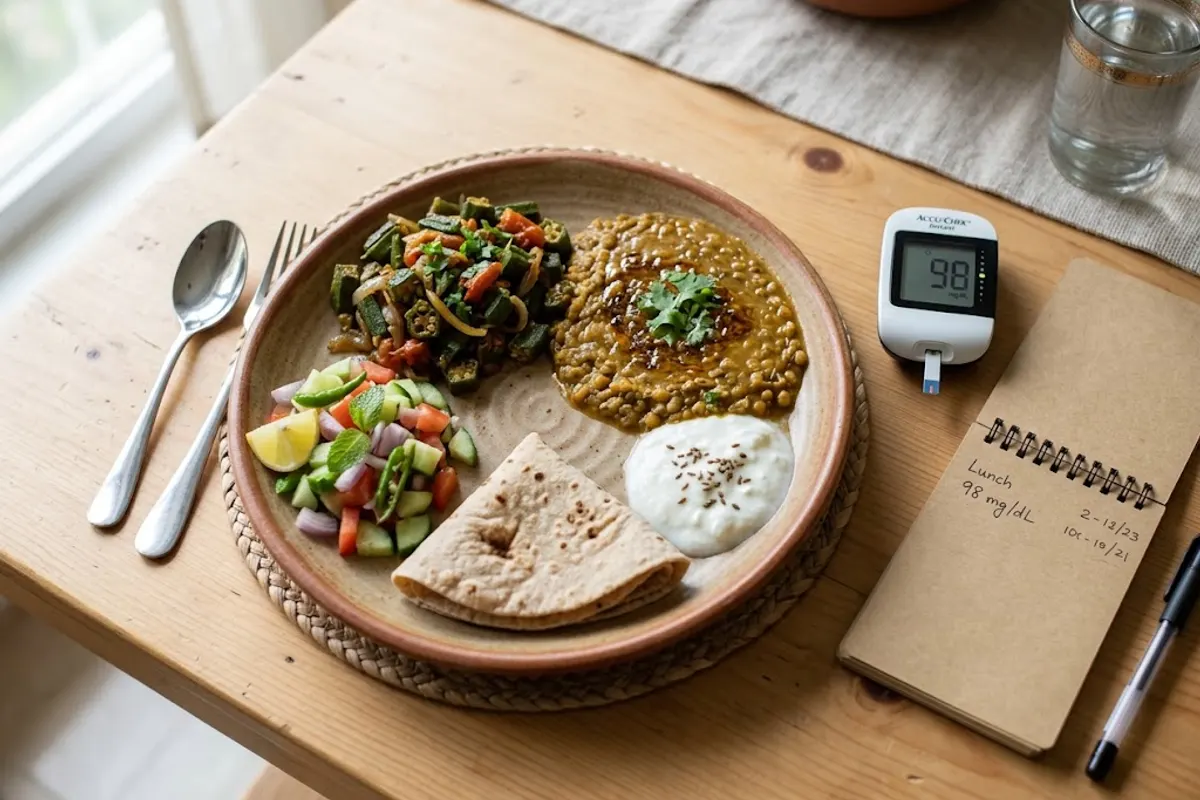
Gestational diabetes is controlled with three small meals, two or three snacks and a bedtime snack, a measured amount of carbohydrate at each, protein with every meal and a walk after meals. Avoid juice, sweets and sweet chai. Your doctor checks your sugar readings and adds insulin if diet is not enough.
Usual sugar targets in pregnancy
| Reading | Common target |
|---|---|
| Fasting (before breakfast) | Below 95 mg/dL |
| 1 hour after the start of a meal | Below 140 mg/dL |
| 2 hours after the start of a meal | Below 120 mg/dL |
These are common ADA targets. Your doctor sets your own, and you test as advised. Do not change your treatment without your doctor.
6 rules for gestational diabetes
- Eat every 2 to 3 hours. 3 small meals, 2 or 3 snacks and a bedtime snack stop big sugar rises and night lows.
- Measure carbohydrate. 1 chapati or ½ cup rice per meal, and a small portion in snacks.
- Always add protein and sabzi. They slow the sugar rise.
- Cut sweet drinks completely. Juice, cold drinks, sweet chai and shakes raise sugar the fastest.
- Walk 10 to 15 minutes after meals, unless your doctor advises rest.
- Do not skip carbohydrate or diet to lose weight. Pregnancy needs at least about 175 g of carbohydrate a day (ADA and IOM minimum); very low-carbohydrate or keto diets are not safe because they can cause ketones. Read the pregnancy diet plan.
Sample one-day chart for gestational diabetes
| Nashta · 8:00 | 1 chapati, 1 egg or ½ katori daal, chai without sugar (no daliya with fruit, no paratha) | small carb |
|---|---|---|
| Mid-morning | 1 small fruit (amrood or seb) with 5 almonds | not juice |
| Lunch · 1:30 | ½ plate sabzi and salad, daal or chicken, 1 chapati or ½ cup rice, dahi | plate method |
| Evening · 5:00 | Roasted chanay or 1 katori dahi with a few nuts | protein snack |
| Dinner · 8:00 | Sabzi, fish or chicken or daal, 1 chapati, salad | early |
| Bedtime snack · 10:00 | 1 glass of milk or 1 slice of whole-wheat bread with peanut butter | avoid night low |
Your doctor must lead your plan if
- You were already diabetic before pregnancy (type 1 or type 2)
- You take insulin or sugar tablets
- You lose weight in pregnancy, or you have ketones in your urine
- You have kidney disease or high blood pressure
- You feel dizzy or shaky between meals (low sugar)
In these cases a general chart can be wrong for you. Book an online consultation.
Gestational diabetes diet: common questions
What is gestational diabetes?
It is high blood sugar that starts in pregnancy, usually found on the glucose tolerance test at 24 to 28 weeks. It often settles after delivery, but it raises the risk of type 2 diabetes later, so follow-up tests are needed.
Can gestational diabetes be controlled with diet?
For many women, yes. Careful carbohydrate portions, regular meals and a walk after meals control sugar. If readings stay high, your doctor adds insulin, which is safe for the baby.
Which foods should I avoid with gestational diabetes?
Fruit juice, cold drinks, sweets, mithai, sweet chai, and large portions of white rice and roti. Mango, grapes and dates should be very small or avoided if your sugar is high.
How many chapatis can I eat?
Most women manage 1 chapati per meal and 1 or 2 small snacks of carbohydrate. The right amount depends on your readings, so test and adjust with your doctor and dietitian.
Is it safe to follow a diabetes diet in pregnancy?
Yes, if it is not too low in carbohydrate. You need some carbohydrate every day for the baby's growth. Do not cut it out completely or start a weight loss diet in pregnancy.
Will my baby be affected?
Good sugar control lowers the risk of a large baby, difficult delivery and low sugar in the baby after birth. This is why regular testing and following the plan matter.
Want a plan made for your body?
Send your weight, height, reports and goal on WhatsApp. A qualified dietitian makes your personal chart and adjusts it at follow-ups.