Diabetes diet chart: Pakistani food for type 2 diabetes
A diabetes diet chart keeps blood sugar steady with three regular meals, the same amount of carbohydrate at each meal, and no sugary drinks. Use the plate method: half the plate sabzi and salad, a quarter protein (daal, chicken, fish, egg), and a quarter roti or rice.
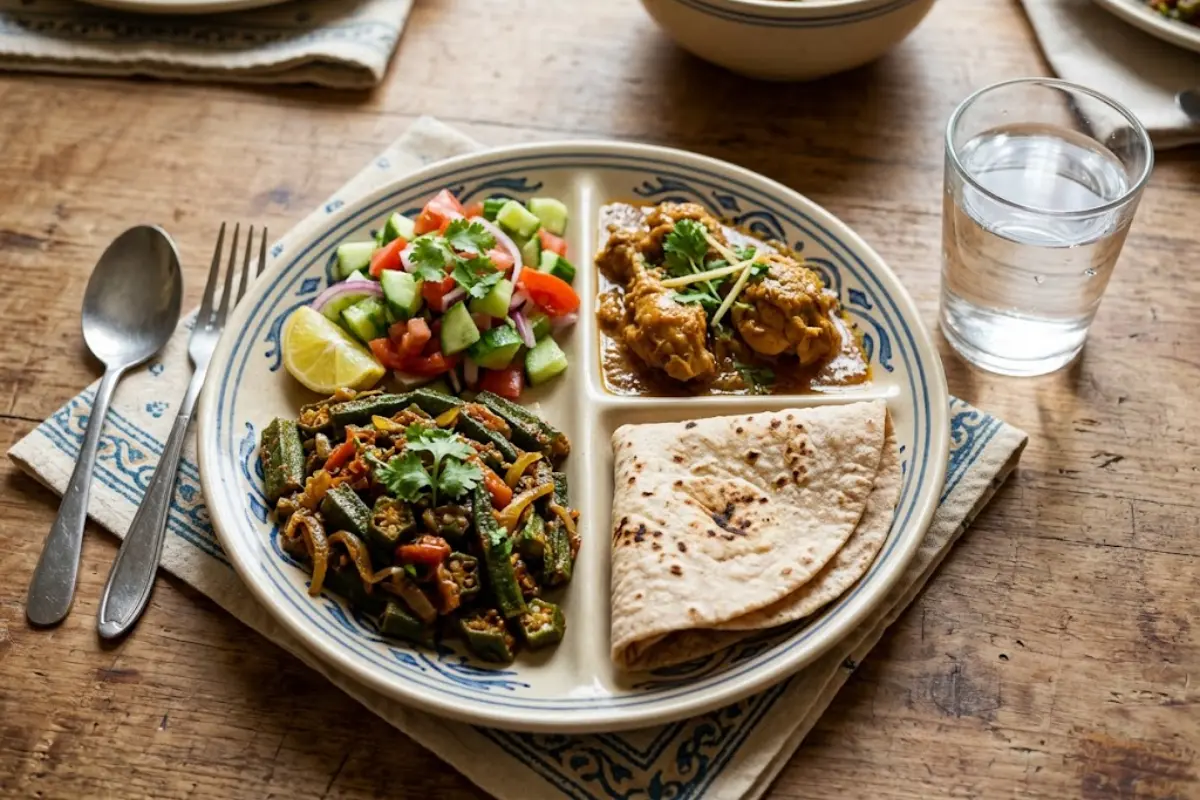
The diabetes plate: how to fill it
| Part of plate | What goes there |
|---|---|
| ½ plate | Sabzi and salad: palak, bhindi, tinda, lauki, gobhi, cucumber, tomato |
| ¼ plate | Protein: daal, chana, egg, chicken, fish, dahi |
| ¼ plate | Carbohydrate: 1 chapati, or about ½ cup cooked rice |
6 rules of a diabetes diet
- Eat at the same times every day. Regular meals make sugar levels and medicines work predictably.
- Keep carbs similar at each meal. One chapati at lunch and one at dinner is steadier than none at lunch and three at dinner.
- Remove sugar from drinks. Chai sugar, juices and cold drinks raise sugar the fastest.
- Eat whole fruit, one portion at a time. Never as juice.
- Choose chakki atta and daal. Fibre slows the rise in blood sugar.
- Walk after meals. A 10–15 minute walk after lunch and dinner helps lower sugar.
Sample one-day diabetes diet chart
| Nashta · 8:00 | 1 chapati, 1 egg or ½ katori daal, chai without sugar | no rusk |
|---|---|---|
| Mid-morning | 1 small fruit (amrood, seb, nashpati) or a handful of roasted chanay | 1 portion |
| Dopahar · 1:30 | ½ plate sabzi and salad, ¼ plate daal or chicken, 1 chapati | plate method |
| Shaam · 5:00 | Chai without sugar + 4–5 almonds or a small katori of dahi | no biscuits |
| Raat · 8:00 | ½ plate sabzi, ¼ plate fish, chicken or daal, 1 chapati, raita | same time daily |
Pakistani food swaps for diabetes
Small changes to everyday food, without a separate menu.
| Instead of | Try |
|---|---|
| Chai with sugar | Chai without sugar (reduce slowly) |
| Fruit juice, sugarcane juice | One whole fruit |
| Full plate of rice | ½ plate rice with sabzi and daal |
| Paratha, puri | Dry chapati of chakki atta |
| Mithai, halwa, kheer | Fruit, or a small portion only on special days |
| Potato as the main sabzi | Leafy and green sabzi; potato as a small side |
Diet and diabetes medicines
If you take insulin or tablets such as glimepiride or gliclazide, skipping or delaying a meal can make your sugar drop too low. Do not change meal times or cut carbohydrates sharply without your doctor or dietitian. If you are pregnant, see the pregnancy sugar diet chart instead.
Check your BMI
Uses the Asian BMI ranges, which are lower than the Western ones because health risks start at a lower weight in South Asians.
BMI is a screening number, not a diagnosis. It does not separate muscle from fat, and it is not used in pregnancy.
Send my BMI to a dietitianTalk to a dietitian first if
- You take insulin or sulfonylurea tablets (risk of low sugar if meals change)
- You have type 1 diabetes, or diabetes in pregnancy
- Your HbA1c is very high or you have kidney disease
- You often get low sugar (shaking, sweating, confusion)
- You are under 18
In these cases a general chart can be wrong for you. Book an online consultation.
Diabetes diet: common questions
Can a diabetic eat roti and rice?
Yes, in measured portions. Keep carbohydrates to about a quarter of the plate and eat them with sabzi and protein. Most people with type 2 diabetes manage 1 chapati per meal; your dietitian adjusts this to your sugar readings and medicines.
Which fruits are good for diabetes?
Most whole fruits are fine in a single portion: amrood, seb, nashpati, kinnow, papaya. Mango, grapes, chikoo and dates raise sugar faster, so keep them small and occasional. Avoid fruit juices.
Is gur or honey better than sugar for diabetes?
No. Gur, shakkar and honey raise blood sugar like white sugar. Treat them the same way and keep them out of daily chai.
Can diet alone control diabetes?
In early type 2 diabetes, diet, weight loss and activity can bring sugar levels down a lot. Many people still need medicines. Never stop or change diabetes medicines without your doctor.
Can a diabetic keep Ramadan fasts?
Some people with well-controlled diabetes can, with a plan agreed with their doctor before Ramadan. People on insulin or certain tablets have a higher risk of low sugar and need medical advice first.
Want a plan made for your body?
Send your weight, height, reports and goal on WhatsApp. A qualified dietitian makes your personal chart and adjusts it at follow-ups.