Diet plan for weight loss for women: a Pakistani chart
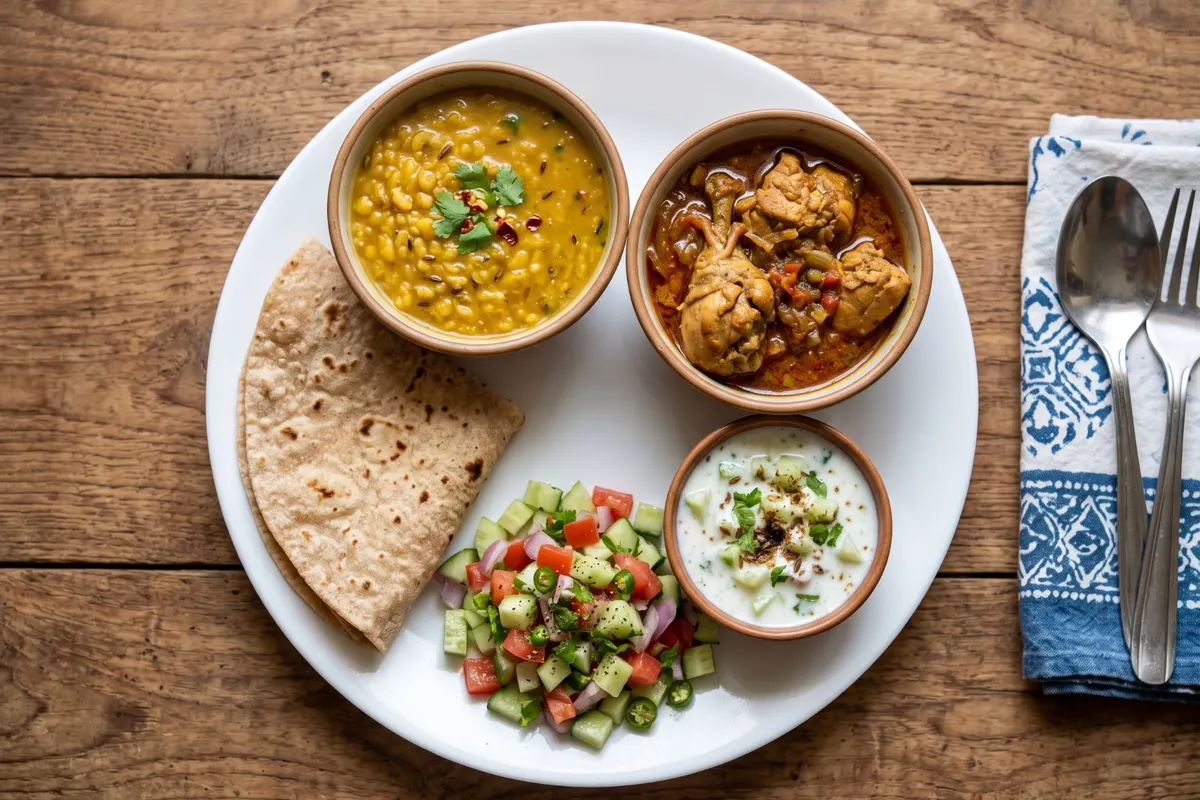
A good weight loss diet for women in Pakistan keeps home food (roti, daal, sabzi, salan), cuts sugar and measured oil, and puts protein, iron and calcium at the centre. Most women lose weight steadily on about 1,200 to 1,500 calories a day. Aim for about ½ kg a week.
What is different about weight loss for women
- Smaller calorie budget. Women usually need fewer calories than men, so there is less room for chai sugar, biscuits and fried snacks. Small daily extras matter more.
- Iron. Women of 19 to 50 need about 18 mg of iron a day, more than double a man's need, because of monthly blood loss. Pakistan's National Nutrition Survey 2018 found that about 4 in 10 women of reproductive age are anaemic. A diet that cuts daal, chana, meat and eggs to "save calories" can make tiredness worse.
- Calcium and bone. Adult women need about 1,000 mg of calcium a day. Milk, dahi and paneer are the easiest sources; strict diets often remove them.
- Hormones. PCOS, an underactive thyroid, pregnancy and menopause all affect weight. If you have one of these, the diet must fit it.
- Waist size. For South Asian women, a waist of 80 cm (about 31.5 inches) or more is linked to higher risk of diabetes and heart disease, even when BMI looks normal.
6 rules that work for most women
- Eat your own planned meal. Many women cook for the family and eat leftovers or skip meals. A planned plate at fixed times prevents evening overeating.
- Protein at every meal. Egg, dahi, daal, chana, chicken or fish keep you full and protect muscle.
- Keep iron foods in. Daal, chana, lobia, palak with lemon, eggs and meat. Take chai an hour away from meals; tea reduces iron absorption.
- Two servings of dairy a day. A cup of milk without sugar and a katori of dahi or raita.
- Sugar out of chai first. Reduce half a spoon at a time until you need none.
- Move every day. A brisk 30-minute walk on most days, and strength exercises two days a week, as WHO advises for adults.
Sample one-day weight loss for women diet chart
| On waking | 1–2 glasses of water. Chai or green tea without sugar if you like | |
|---|---|---|
| Nashta · 8:00 | 1 chapati or 1 katori daliya, 1 boiled egg or 1 katori dahi, chai with little or no sugar | protein |
| Mid-morning | 1 fruit (amrood, seb, kinnow) with 4–5 almonds | fibre |
| Dopahar · 1:30 | ½ plate salad or sabzi, 1 katori daal, chana or chicken salan, 1 chapati | iron + protein |
| Shaam ki chai | Chai with little sugar + roasted chanay, or 1 glass milk without sugar | calcium |
| Raat · 8:00 | 1 katori sabzi with chicken, fish, egg or paneer, raita, ½–1 chapati | light carbs |
Pakistani food swaps for weight loss for women
Small changes to everyday food, without a separate menu.
| Instead of | Try |
|---|---|
| Chai with rusk or biscuits | Chai with roasted chanay or a few nuts |
| Leftover paratha for nashta | 1 dry chapati with an egg or dahi |
| Eating the children's leftovers | Your own measured plate, eaten sitting down |
| Skipping lunch, then a big dinner | A planned lunch and a lighter dinner |
| Sweet lassi or packaged juice | Salted lassi, plain dahi or water |
| Mithai at every family visit | A small piece on special days, after a meal |
Weight loss at different stages of life
With PCOS: steady blood sugar matters most. Follow the PCOS diet plan. Losing 5 to 10 percent of your weight often helps periods.
With an underactive thyroid: take your tablet on an empty stomach and keep it away from milk and iron tablets. See the thyroid diet chart.
After delivery: wait for your doctor's check-up, and do not diet strictly while breastfeeding. See the post-pregnancy weight loss plan.
Around menopause: muscle and bone are lost faster, so protein, calcium and strength exercise matter even more than before.
Check your BMI
Uses the Asian BMI ranges, which are lower than the Western ones because health risks start at a lower weight in South Asians.
BMI is a screening number, not a diagnosis. It does not separate muscle from fat, and it is not used in pregnancy.
Send my BMI to a dietitianTalk to a dietitian first if
- You are pregnant (see the pregnancy diet plan instead)
- You delivered in the last 6 weeks, or you are breastfeeding a young baby (see the post-pregnancy plan)
- You have diabetes and take insulin or sugar tablets
- You have kidney, liver or heart disease
- You are under 18
- You have, or have had, an eating disorder
In these cases a general chart can be wrong for you. Book an online consultation.
Weight loss for women diet: common questions
How many calories should a woman eat to lose weight?
Most women lose weight on about 1,200 to 1,500 calories a day, which is what major obesity guidelines suggest. The right number depends on your weight, height, age and activity. Going below 1,200 calories is not advised without medical supervision, because it is hard to get enough iron, calcium and protein.
Why is weight loss slower for women than men?
Women usually have less muscle and a smaller body size, so they burn fewer calories and the same diet gives a smaller deficit. Hormone changes around periods, pregnancy and menopause also move the scale. Slower is normal: about ½ kg a week is a good, steady pace.
Why does my weight go up before my period?
Many women retain water in the days before a period, so the scale can rise 1 to 2 kg and drop again afterwards. This is not fat gain. Compare your weight at the same point of each cycle, or track your waist instead.
Can I lose weight if I have PCOS or a thyroid problem?
Yes. With PCOS, steady blood sugar and protein at every meal help most. With an underactive thyroid, take your tablet correctly and keep the diet consistent; weight loss is slower until levels are controlled. See the PCOS and thyroid diet charts, and consult a dietitian for a plan that fits your reports.
Can I diet while breastfeeding?
Not a strict diet. Breastfeeding needs extra energy. A gentle plan that lets you lose weight slowly is fine for most mothers; see the post-pregnancy weight loss plan.
Do I need to go to a gym?
No. A brisk 30-minute walk on most days and simple strength exercises at home (squats, wall push-ups, carrying shopping) are enough to start. Strength work matters for women because it protects muscle and bone.
Want a plan made for your body?
Send your weight, height, reports and goal on WhatsApp. A qualified dietitian makes your personal chart and adjusts it at follow-ups.
Sources
- Jensen MD et al. 2013 AHA/ACC/TOS Guideline for the Management of Overweight and Obesity in Adults. Circulation, 2014
- NIH Office of Dietary Supplements. Iron: fact sheet for health professionals
- UNICEF and Government of Pakistan. National Nutrition Survey 2018: key findings
- International Diabetes Federation. The IDF consensus worldwide definition of the metabolic syndrome (ethnic waist cut-offs)
- World Health Organization. Guidelines on physical activity and sedentary behaviour, 2020