Typhoid diet chart: what to eat in typhoid fever
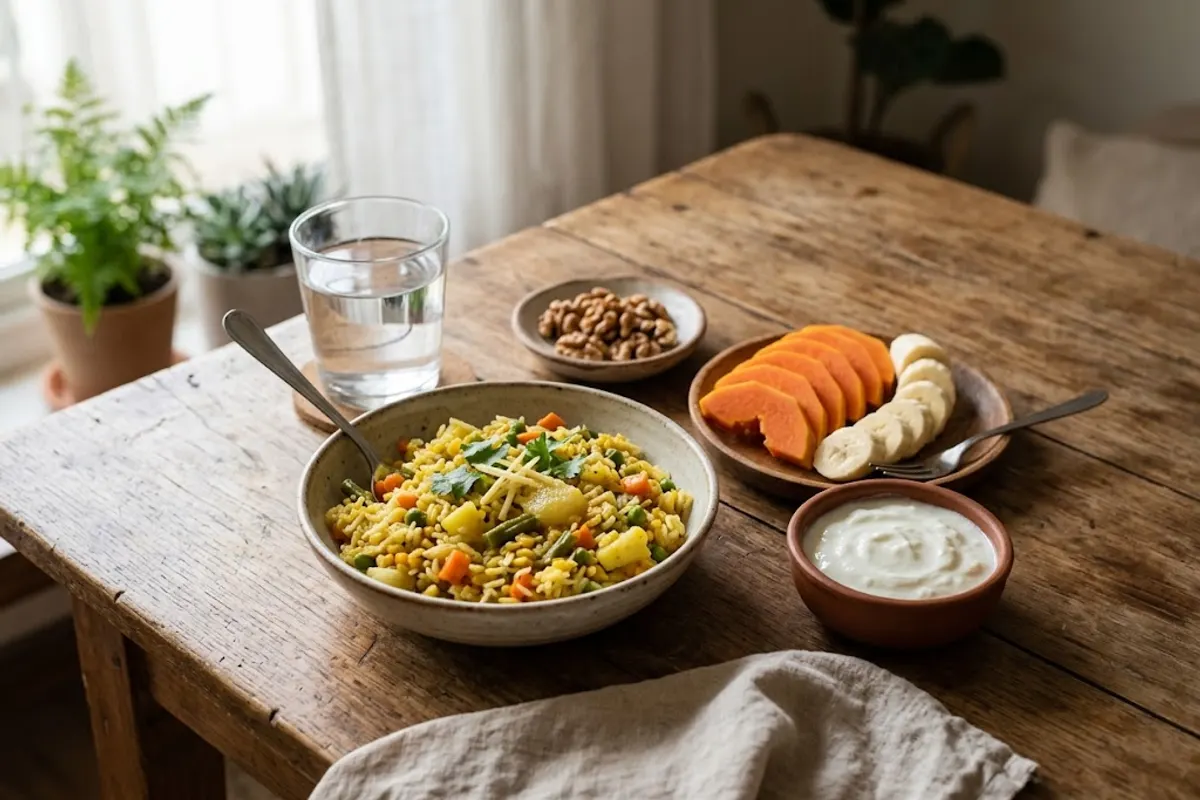
In typhoid, eat soft, cooked, energy-rich food in five or six small meals (khichdi, daliya, soft rice and daal, boiled potato, eggs, yakhni, dahi, banana) and drink plenty of boiled water and ORS. Avoid raw salads, outside food, unboiled water, and oily or spicy food. Antibiotics from your doctor treat typhoid; diet supports recovery.
Why food and water matter in typhoid
Typhoid spreads through contaminated food and water, and the illness inflames the gut. Fever raises energy needs, while poor appetite and loose motions cut what you eat and absorb. So the typhoid diet has three jobs: keep you hydrated, give enough energy and protein, and be gentle on the gut, all with food and water that are safe.
Safe food and water at home
- Boil drinking water for at least one minute, or use sealed bottled water. Avoid ice.
- Eat freshly cooked, hot food; avoid leftovers kept outside the fridge.
- Wash hands with soap before cooking and eating and after using the toilet.
- Ask about the typhoid vaccine for the rest of the family; it is part of Pakistan's programme for children.
Sample one-day typhoid diet diet chart
| Morning | ORS or boiled water; daliya or suji kheer with boiled milk, or 1 soft boiled egg | fluids first |
|---|---|---|
| Mid-morning | Banana, papaya or stewed seb; a glass of boiled water | soft fruit |
| Lunch | Khichdi with moong daal, or soft rice with daal; dahi | easy to digest |
| Afternoon | Chicken yakhni or vegetable soup | protein + fluids |
| Evening | Boiled potato or a few plain biscuits; lassi or milk if tolerated | |
| Dinner | Soft chapati or rice with lauki/tori sabzi and daal, or khichdi | small portion |
Pakistani food swaps for typhoid diet
Small changes to everyday food, without a separate menu.
| Instead of | Try |
|---|---|
| Tap water, ice, street drinks | Boiled or bottled water, ORS |
| Raw salads and cut fruit from outside | Cooked sabzi and fruit you peel yourself |
| Oily salan, fried and spicy food | Khichdi, daliya, yakhni, boiled potato |
| Stopping antibiotics when fever goes | Completing the full course your doctor prescribed |
| Three heavy meals | Five or six small meals |
After the fever: rebuilding strength
Once the fever settles, add back normal chapati, sabzi, daal, chicken and fruit over a week. Include protein at every meal (eggs, daal, chicken, milk, dahi) to rebuild muscle. See protein-rich Pakistani foods. If weight keeps dropping, talk to a dietitian.
See a doctor again if
- Fever stays high after 3 days of antibiotics, or comes back
- You have severe stomach pain, black or bloody stool, or keep vomiting
- The patient is confused, very drowsy or cannot drink
- The patient is a child, pregnant, elderly, or has another illness
In these cases a general chart can be wrong for you. Book an online consultation.
Typhoid diet diet: common questions
What should a typhoid patient eat?
Soft, cooked, energy-rich food in small frequent meals: khichdi, daliya, soft rice with daal, boiled potato, eggs, yakhni, dahi, banana and papaya, plus plenty of safe fluids (boiled water, ORS, soup). Fever burns extra energy, so eating enough matters.
What should be avoided in typhoid?
Unboiled water and ice, raw salads, cut fruit and food from outside, very oily, spicy and fried food, and coarse high-fibre food (like bran and raw vegetables) until the stomach settles. Avoid alcohol.
Can a typhoid patient drink milk?
Yes, if it suits the stomach. Use boiled milk, dahi or lassi. If milk causes loose motions or bloating during the illness, use dahi instead for a few days.
How long should the typhoid diet continue?
Soft food while the fever lasts and for about a week after, then return to normal home food slowly. Recovery of weight and strength often takes several weeks; protein-rich food helps.
Can diet cure typhoid?
No. Typhoid is a bacterial infection and needs antibiotics prescribed by a doctor. In Pakistan, extensively drug-resistant (XDR) typhoid is common, so the right antibiotic and a full course are essential. Diet supports recovery.
Want a plan made for your body?
Send your weight, height, reports and goal on WhatsApp. A qualified dietitian makes your personal chart and adjusts it at follow-ups.