DASH diet plan: a Pakistani version for blood pressure
The DASH diet is an eating pattern for lowering blood pressure: lots of sabzi and fruit, whole grains, low-fat dahi, daal and nuts, lean protein, and little salt, ghee and sugar. In trials it lowered systolic blood pressure by about 5 to 11 mmHg. It works with desi food, but it does not replace blood pressure medicine.
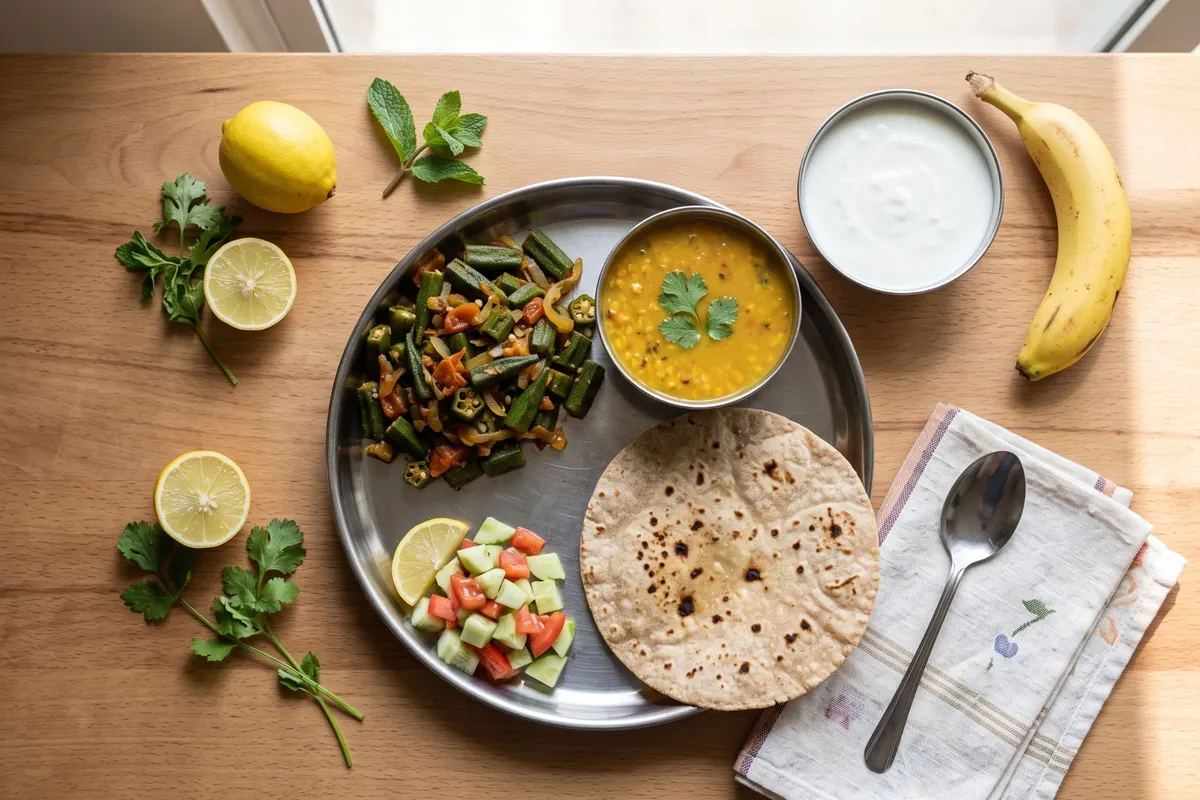
What the DASH diet is
DASH (Dietary Approaches to Stop Hypertension) was tested in large US trials. It is not a fad: it is a pattern high in potassium, magnesium, calcium and fibre and low in sodium and saturated fat. It is also the base of most heart-healthy advice. For normal blood pressure ranges, symptoms and a full 7-day menu, see normal blood pressure and the high BP diet chart.
DASH servings per day, in desi portions
These are the standard servings for a 2,000 kcal day, matched to Pakistani food. Smaller or larger appetites scale up or down.
| Food group | Servings a day | One serving looks like |
|---|---|---|
| Grains (mostly whole) | 6 to 8 | 1 chapati, 1 slice bread, or ½ cup cooked rice or daliya |
| Vegetables | 4 to 5 | 1 katori cooked sabzi, or a cup of salad or raw leaves |
| Fruit | 4 to 5 | 1 medium fruit (apple, banana, kinnow) or ½ cup cut fruit |
| Low-fat dairy | 2 to 3 | 1 glass of milk or 1 katori dahi |
| Lean meat, chicken, fish, eggs | 6 or fewer (a palm-sized piece is about 3) | 30 g cooked chicken, fish or meat, or 1 egg; a palm-sized piece is about 90 g |
| Nuts, seeds, daal and beans | 4 to 5 a week | A small handful of nuts, or 1 katori daal, chana or lobia |
| Fats and oils | 2 to 3 | 1 teaspoon oil or ghee |
| Sweets and added sugar | 5 or fewer a week | 1 tablespoon sugar or jam, or 1 small piece of mithai |
Based on the NHLBI DASH eating plan. A chapati can count as 1 to 1.5 grain servings depending on size.
Salt on the DASH diet
The standard plan limits sodium to 2,300 mg a day, about 1 teaspoon (5.8 g) of salt; the lower-sodium version is 1,500 mg. Cut salt slowly: your taste adjusts in 2 to 3 weeks. Lemon, garlic, ginger, mint, dhania and jeera replace salt in salan and daal. Achar, papad, nimko, bread and restaurant food hide most of the salt.
Sample one-day DASH diet chart
| Nashta | Daliya or oats in low-fat milk with 1 chopped apple and 5 almonds; tea with little sugar | whole grain + fruit |
|---|---|---|
| Mid-morning | 1 fruit (kela, kinnow or papaya) | potassium |
| Lunch | 2 chapatis of chakki atta, 1 katori lauki or palak sabzi, 1 katori daal, salad with lemon, 1 katori low-fat dahi | little salt |
| Evening | Roasted chanay or unsalted nuts (a small handful), green tea | no nimko |
| Dinner | Grilled fish or chicken, 1 katori mixed sabzi, salad, 1 chapati | lean protein |
Pakistani food swaps for the DASH diet
Small changes to everyday food, without a separate menu.
| Instead of | Try |
|---|---|
| Extra salt at the table, achar, papad, nimko | Lemon, garlic, ginger, jeera, dhania, mint |
| White bread, maida, naan | Chakki-atta chapati, daliya, brown bread |
| Ghee, butter, deep-fried snacks | Measured vegetable oil, grilled or baked food |
| Cold drinks and packaged juice | Water, nimbu pani without sugar, plain lassi |
| Processed meat (sausage, nuggets) | Fresh chicken, fish, eggs, daal |
| Full-fat dahi and milk in large amounts | Low-fat dahi and milk |
How to start this week
- Add one fruit and one extra sabzi to your day before you cut anything.
- Switch to chakki atta and daliya or oats for nashta.
- Measure oil and ghee; grill or bake instead of frying.
- Use low-fat dahi and milk.
- Take salt off the table and skip achar, papad and nimko.
- Check your blood pressure at home as your doctor advises and keep taking prescribed medicines.
Check with your doctor first if
- You have kidney disease or take potassium-sparing medicines (potassium may be unsafe)
- Your blood pressure is above 180/120 or you have chest pain, breathlessness or sudden weakness (emergency)
- You take blood pressure medicines (diet can lower pressure further; your doctor must adjust doses)
- You are pregnant with high blood pressure
- You have heart failure with a fluid limit
In these cases a general chart can be wrong for you. Book an online consultation.
DASH diet: common questions
What is the DASH diet?
DASH stands for Dietary Approaches to Stop Hypertension. It is an eating pattern rich in vegetables, fruit, whole grains, low-fat dairy, daal and nuts, and low in salt, saturated fat and sugar. It was developed in the United States to lower blood pressure and is recommended by major heart guidelines.
How much does the DASH diet lower blood pressure?
In the original DASH trial, people eating the DASH diet had systolic blood pressure about 5.5 mmHg lower than on a typical diet, and about 11 mmHg lower in people who already had high blood pressure. Reducing salt on top of DASH lowers it further. Results vary from person to person and do not replace medicines.
Is the DASH diet only for people with high blood pressure?
No. It suits most healthy adults, people with heart disease risk, type 2 diabetes and overweight. It is also a good family meal pattern. People with kidney disease or on certain medicines need to check potassium with their doctor first.
How much salt is allowed on the DASH diet?
The standard DASH plan keeps sodium under 2,300 mg a day (about 1 teaspoon or 5.8 g of salt). The lower-sodium version aims for 1,500 mg (about ¾ teaspoon). WHO advises under 5 g of salt a day. Hidden salt in achar, chips, bread and restaurant food counts.
Can the DASH diet be followed with Pakistani food?
Yes. Use chakki atta, daal, chana, sabzi, fruit, plain dahi, fish and chicken, cooked with little salt and measured oil. The biggest changes are less salt, less ghee and fewer fried or salted snacks.
Is the DASH diet good for weight loss?
It is not a weight-loss diet by itself, but it is filling and low in energy-dense food. If you also need to lose weight, follow the DASH pattern and reduce portions; see the Pakistani diet plan for weight loss.
Is the DASH diet safe for kidney patients?
Not always. DASH is high in potassium (fruit, vegetables) and phosphorus (nuts, dairy, daal), which can be unsafe in advanced kidney disease. People with kidney disease, and those on potassium-sparing medicines, should ask their nephrologist before starting.
Want a plan made for your body?
Send your weight, height, reports and goal on WhatsApp. A qualified dietitian makes your personal chart and adjusts it at follow-ups.