Mediterranean diet in Pakistan: a desi plan and food list
The Mediterranean diet is mostly plants: vegetables, fruit, daal and chana, whole grains and nuts, with fish at least twice a week, a measured plant oil as the main fat, and little red meat or sweets. It fits Pakistani food well and, in the PREDIMED trial, lowered major heart events by about 30% in high-risk adults.
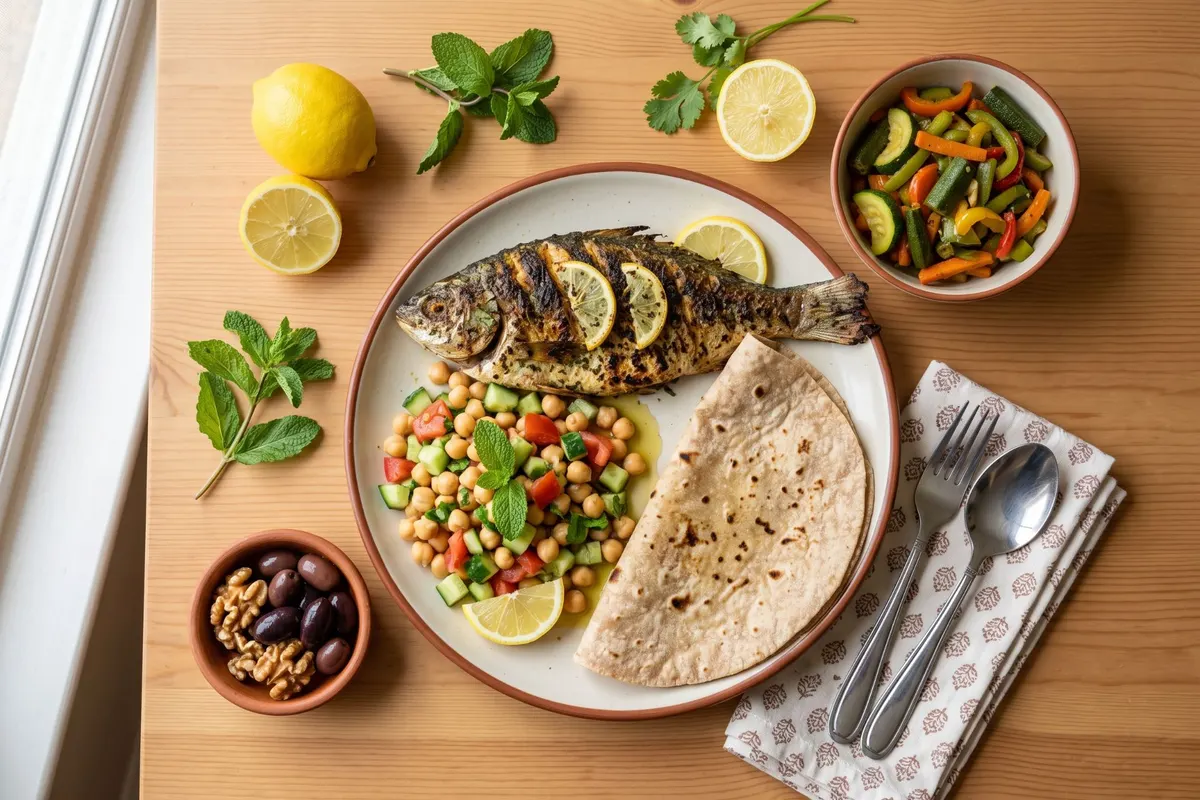
What the Mediterranean diet is
It is not a short diet with a fixed menu. It is the long-term eating style of countries such as Greece, Italy and Spain: food from plants, fish, olive oil, and little red meat. In the PREDIMED trial of about 7,000 people at high heart risk, those eating a Mediterranean diet with extra olive oil or nuts had about 30% fewer major cardiovascular events than those on a low-fat diet. It is also linked with better blood sugar control and a healthier weight.
Mediterranean diet food list for Pakistan
| How often | Foods (local equivalents) |
|---|---|
| Every meal | Vegetables, salad, fruit, wholewheat chapati, daliya or brown rice, and olive or other plant oil in measured amounts |
| Every day | Daal, chana, lobia or rajma; nuts (a small handful); plain dahi or milk in moderate amounts; herbs, garlic, lemon, spices |
| Twice a week or more | Fish and seafood |
| A few times a week | Eggs and chicken in moderate portions |
| Rarely | Red meat (mutton, beef), sweets, mithai, bakery items, fried food, processed meat, sugary drinks |
Eating Mediterranean on a Pakistani budget
- Legumes are the cheapest protein: daal, chana, lobia and rajma replace meat on 3 to 4 days.
- Local fish such as rohu is fine; frozen fish works if fresh is costly.
- Walnuts and almonds in a small handful, or peanuts as a cheaper option.
- Seasonal sabzi and fruit cost less and taste better.
- Olive oil is optional. Use any plant oil in measured amounts.
Sample one-day Mediterranean diet chart
| Nashta | 1 wholewheat chapati with 2 egg omelette and tomato, 1 katori plain dahi, 1 fruit | whole grain + protein |
|---|---|---|
| Mid-morning | A small handful of walnuts or almonds | healthy fats |
| Lunch | 1 katori chana or lobia salad with cucumber, tomato, onion, lemon and 1 teaspoon olive or canola oil; 1 chapati; sabzi | legumes |
| Evening | Fruit (orange, apple or pomegranate) and green tea | |
| Dinner | Grilled or baked fish (or chicken), 1 katori mixed sabzi, salad, ½ plate rice or 1 chapati | fish 2x a week |
Pakistani food swaps for the Mediterranean diet
Small changes to everyday food, without a separate menu.
| Instead of | Try |
|---|---|
| Ghee and butter for all cooking | Measured olive, canola or sunflower oil; a little ghee only on special days |
| White rice and naan every meal | Wholewheat chapati, daliya, brown rice in smaller portions |
| Red meat several times a week | Fish, chicken, eggs, daal, chana |
| Biscuits, cake and mithai as snacks | Fresh fruit, dates in small number, a handful of nuts |
| Fried samosa, pakora, chips | Roasted chana, baked or grilled snacks, hummus (chana) with cucumber |
| Cold drinks and juice | Water, lemon water, green tea |
Mediterranean or DASH?
Both are heart-healthy. If your main goal is lower blood pressure, start with the DASH diet plan and its salt limits; if your goal is general heart and blood sugar health with an easy long-term pattern, choose Mediterranean. You can combine them, and a dietitian can fit either to your reports.
Ask your doctor or dietitian first if
- You have kidney disease (nuts, legumes and some vegetables are high in potassium and phosphorus)
- You take warfarin or other blood thinners (large changes in green leafy vegetables affect them)
- You have a nut, fish or seafood allergy
- You have diabetes and take insulin or sugar tablets (meals and carbohydrates need planning with your doctor)
- You are pregnant (fish choices need care; see the pregnancy diet plan)
In these cases a general chart can be wrong for you. Book an online consultation.
Mediterranean diet: common questions
What is the Mediterranean diet?
It is the traditional eating pattern of countries around the Mediterranean sea: mostly plants (vegetables, fruit, legumes, whole grains, nuts), olive oil as the main fat, fish often, and little red meat and sweets. It is studied more than almost any other diet for heart health.
Can the Mediterranean diet be followed in Pakistan?
Yes, the pattern is closer to Pakistani home cooking than many people think: daal, chana, lobia, sabzi, salad, fish, dahi, nuts and chapati already fit. The main changes are less ghee, less red meat, fewer sweets and fried food, and fish at least twice a week.
Do I need olive oil?
Olive oil is the traditional fat, but you do not have to buy imported oil to eat in this style. Use any vegetable oil in measured amounts (about 1 teaspoon per person per meal), such as canola or sunflower, and use olive oil if your budget allows. The key is more plants and less ghee, meat and sugar.
Is the Mediterranean diet good for weight loss?
It helps, because it is filling and rich in fibre, but it is not low in calories automatically. Nuts and oil add up. If you also want to lose weight, follow the pattern and watch portions; see the Pakistani diet plan for weight loss.
Is the Mediterranean diet good for diabetes and the heart?
Studies show it can lower the risk of heart attack and stroke in high-risk adults and improve blood sugar control in type 2 diabetes. It does not replace medicines, and people with diabetes still need to keep portions of chapati and rice measured.
Mediterranean diet vs DASH diet: which one?
Both are plant-rich and heart-healthy. DASH is built to lower blood pressure and sets salt and serving targets; the Mediterranean diet focuses on food quality, olive oil and fish. Most people can combine them: Mediterranean-style food, cooked with little salt.
What is not allowed in the Mediterranean diet for Muslims?
Alcohol and wine appear in traditional descriptions of the diet but are not part of the plan here; the health benefits come from the food pattern, not from wine. Use halal meat and fish as usual.
Want a plan made for your body?
Send your weight, height, reports and goal on WhatsApp. A qualified dietitian makes your personal chart and adjusts it at follow-ups.
Sources
- Estruch R et al. Primary prevention of cardiovascular disease with a Mediterranean diet supplemented with extra-virgin olive oil or nuts (PREDIMED). N Engl J Med, 2018
- Lichtenstein AH et al. 2021 Dietary Guidance to Improve Cardiovascular Health: AHA Scientific Statement. Circulation, 2021
- NHS. The Mediterranean diet
- American Diabetes Association. Standards of Care in Diabetes, Section 5: Facilitating Positive Health Behaviors (nutrition therapy)